Showing posts with label wood. Show all posts

Friday, September 23, 2016

Vintage Japanese Wood Cake Mold - Kashigata - Japanese Cake Mold - Wood Cake Mold - Opening Ceremony - Inaugural Meeting

Vintage Japanese Wood Cake Mold - Kashigata - Japanese Cake Mold - Wood Cake Mold - Opening Ceremony - Inaugural Meeting


Vintage Japanese Wood Cake Mold - Kashigata - Japanese Cake Mold - Wood Cake Mold - Opening Ceremony - Inaugural Meeting


This is a vintage mold called "kashigata". Kashigata was used in the making of wagashi (nama-gashi or freshly made cake and hi-gashi or dried confectionery) for tea ceremonies. You can use this mold as food mold to cook. Please clean thoroughly before using.

發會式 hakkai shiki = an opening [inaugural] ceremony [meeting]

It measures 10.5cm long x 4cm wide x 1cm tall.

Often made of sakura (cherry wood) and seasoned for about 3 years before carving, kashigata were used to make dried confectionery made of rice flour and sugar called rakugan. Earliest records show that this practice dates back to the mid-17th century. These confections were used as offerings and snacks for celebratory occasions and even unfortunate events. For example when a person died, it was expensive to give flowers or fresh food so, people made these sweets in the form of flowers, fish etc. These items were then placed on the "butsudan" (family shrine found in the house) for the dead person.

Common kashigata motifs in the Edo era - chrysanthemums, plum blossoms
Meiji Era - spread of western technology - balloons, planes
World War II - national pride heightened - cherry blossoms, battleships - used as gifts for departing troops, ceremonies and commemorative occasions

With the advent of refrigeration, fresh fish replaced rakugan motifs like the sea bream. Sadly today, making offerings for fortunate and unfortunate events is no longer a common practice. This in turn has lessened rakugan demand although they are still found in tea ceremonies and homes. The decrease in kashigata artisans today has made kashigata carving a dying craft making kashigata itself a sought-after collectible.

**********************************************************
Other Kashigata Molds available on our Etsy store

https://www.etsy.com/shop/vintagefromjapan?section_id=6167895


We will combine shipping if you buy from any of our stores.

Friday, September 16, 2016

Wood And Metal Stamps - Mixed Set of 20 - Shapes Arrows And Other Stamps (Set 2)

Wood And Metal Stamps - Mixed Set of 20 - Shapes Arrows And Other Stamps (Set 2)


Wood And Metal Stamps - Mixed Set of 20 - Shapes Arrows And Other Stamps (Set 2)


This is a set of stamps that are mostly shapes likes arrows, pipes etc. Some are large and some are quite small.Mostly they are metal and wood. 


They vary in size but the largest is 3 x 2.6 cm and the smallest is 5mm wide.

It is vintage and therefore, not perfect. Please look at the pictures carefully.

This vintage wood stamp is from the "昭和" "showa period" . The "showa" period is from 1926-1989 but these are at least 20 years old. 


**********************************************************
Our Etsy Stores:

Supplies FromJapanWithLove.etsy.com
Vintage VintageFromJapan.etsy.com

We will combine shipping if you buy from any of our stores.

Monday, July 25, 2016

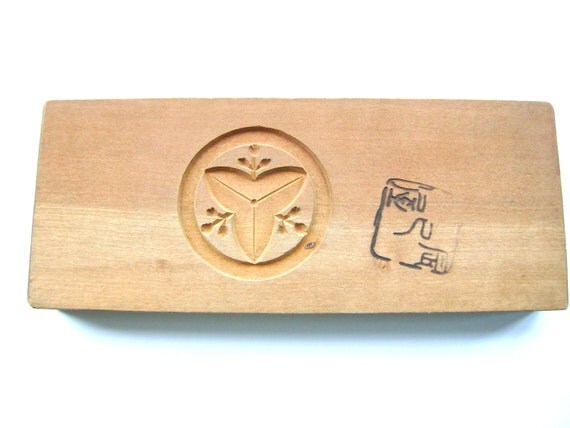
Vintage Kashigata - Japanese Cake Mold - Wood Mold - Wood Cake Mold - Vintage Mold - Kamon - Family Crest - bamboo leaf - caltrap

Vintage Kashigata - Japanese Cake Mold - Wood Mold - Wood Cake Mold - Vintage Mold - Kamon - Family Crest - bamboo leaf - caltrap


Vintage Kashigata - Japanese Cake Mold - Wood Mold - Wood Cake Mold - Vintage Mold - Kamon - Family Crest - bamboo leaf - caltrap


This is a vintage mold called "kashigata". 


Often made of sakura (cherry wood) and seasoned for about 3 years before carving, kashigata were used to make dried confectionery made of rice flour and sugar called rakugan. Earliest records show that this practice dates back to the mid-17th century. These confections were used as offerings and snacks for celebratory occasions and even unfortunate events. For example when a person died, it was expensive to give flowers or fresh food so, people made these sweets in the form of flowers, fish etc. These items were then placed on the "butsudan" (family shrine found in the house) for the dead person.


Kashigata were also used in the making of wagashi (nama-gashi or freshly made cake and hi-gashi or dried confectionery) for tea ceremonies.


Common kashigata motifs in the Edo era - chrysanthemums, plum blossoms
Meiji Era - spread of western technology - balloons, planes
World War II - national pride heightened - cherry blossoms, battleships - used as gifts for departing troops, ceremonies and commemorative occasions


With the advent of refrigeration, fresh fish replaced rakugan motifs like the sea bream. Sadly today, making offerings for fortunate and unfortunate events is no longer a common practice. This in turn has lessened rakugan demand although they are still found in tea ceremonies and homes. The decrease in kashigata artisans today has made kashigata carving a dying craft making kashigata itself a sought-after collectible.

The shape is that of a "kamon" which means a family crest (which crest we don't know). There are no set rules in the design of a kamon. It most commonly consists of a roundel encircling a figure of plant, animal, man-made, natural or celestial objects, all abstracted to various degrees. Religious symbols, geometric shapes and kanji were commonly used as well. These symbols are often found in logos of stores (which help to identify what they sell), sushi restaurants, and on packages of food to lend an air of elegance. Senbei (Japanese crackers) and other traditional Japanese sweets may also use one.


*You can use this mold as food mold to cook. Please clean thoroughly before using.

It measures about 15.3 cm long x 7.6 cm wide x 2.4 cm tall. Inside it measures 5 cm x 5 cm .


**********************************************************
Our Etsy Stores:

Supplies FromJapanWithLove.etsy.com
Deco Sweet Supplies DecoSweets.etsy.com
Food Rings SouZouCreations.etsy.com
Vintage VintageFromJapan.etsy.com

Friday, June 10, 2016

Vintage Japanese Kashigata Mold Double Sided Kamon Family Crests

Vintage Japanese Kashigata Mold Double Sided Kamon Family Crests


Vintage Japanese Kashigata Mold Double Sided Kamon Family Crests


This is a vintage mold called "kashigata". This is a beautiful Japanese vintage wood sweets mold. 

Often made of sakura (cherry wood) and seasoned for about 3 years before carving, kashigata were used to make dried confectionery made of rice flour and sugar called rakugan. Earliest records show that this practice dates back to the mid-17th century. These confections were used as offerings and snacks for celebratory occasions and even unfortunate events. For example when a person died, it was expensive to give flowers or fresh food so, people made these sweets in the form of flowers, fish etc. These items were then placed on the "butsudan" (family shrine found in the house) for the dead person.


Kashigata were also used in the making of wagashi (nama-gashi or freshly made cake and hi-gashi or dried confectionery) for tea ceremonies.


Common kashigata motifs in the Edo era - chrysanthemums, plum blossoms
Meiji Era - spread of western technology - balloons, planes
World War II - national pride heightened - cherry blossoms, battleships - used as gifts for departing troops, ceremonies and commemorative occasions


With the advent of refrigeration, fresh fish replaced rakugan motifs like the sea bream. Sadly today, making offerings for fortunate and unfortunate events is no longer a common practice. This in turn has lessened rakugan demand although they are still found in tea ceremonies and homes. The decrease in kashigata artisans today has made kashigata carving a dying craft making kashigata itself a sought-after collectible.


The shape is that of a "kamon" which means a family crest (which crest we don't know). There are no set rules in the design of a kamon. It most commonly consists of a roundel encircling a figure of plant, animal, man-made, natural or celestial objects, all abstracted to various degrees. Religious symbols, geometric shapes and kanji were commonly used as well. These symbols are often found in logos of stores (which help to identify what they sell), sushi restaurants, and on packages of food to lend an air of elegance. Senbei (Japanese crackers) and other traditional Japanese sweets may also use one.

*You can use this mold as food mold to cook. Please clean thoroughly before using.


It measures 18cm long x 7.2 cm wide x 2.5 cm tall. 

Wednesday, July 1, 2015

Dog - Japanese Shrine Wood Plaque EMA Lucky Charm E4-64

Japanese Shrine Wood Plaque Dog EMA Lucky Charm E4-64

Japanese Shrine Wood Plaque Dog EMA Lucky Charm E4-64


This is an "Ema". "Ema" are small wooden plaques on which Shinto
worshippers write their prayers or wishes. The ema are then left hanging
up at the shrine, where the kami (spirits or gods) receive them. They
bear various pictures, often of animals or other Shinto imagery, and
many have the word gan'i (願意), meaning "wish", written along the side.
In ancient times people would donate horses to the shrines for good
favor, over time this was transferred to a wooden plaque with a picture
of a horse, and later still to the various wooden plaques sold today for
the same purpose.

Ema are sold for various wishes. Common
reasons for buying a plaque are for success in work or on exams, marital
bliss, to have children, and health. Some shrines specialize in certain
types of these plaques, and the larger shrines may offer more than one.
Sales of ema help support the shrine financially.


********This Ema is from Narumi Jinja Shrine in Nagoya. Dod is playing a money hammer. They are lucky charms in year of dog.

開運招福 = good luck and happiness

昭和壬戌歳 = year of dog in showa period

成海神社= Narumi Jinja Shrine

It measures about 8.2 x 6.1 x 0.5 cm.


**********************************************************
Our Etsy Stores:

Supplies FromJapanWithLove.etsy.com
Vintage VintageFromJapan.etsy.com

We will combine shipping if you buy from any of our stores. 

Monday, May 25, 2015

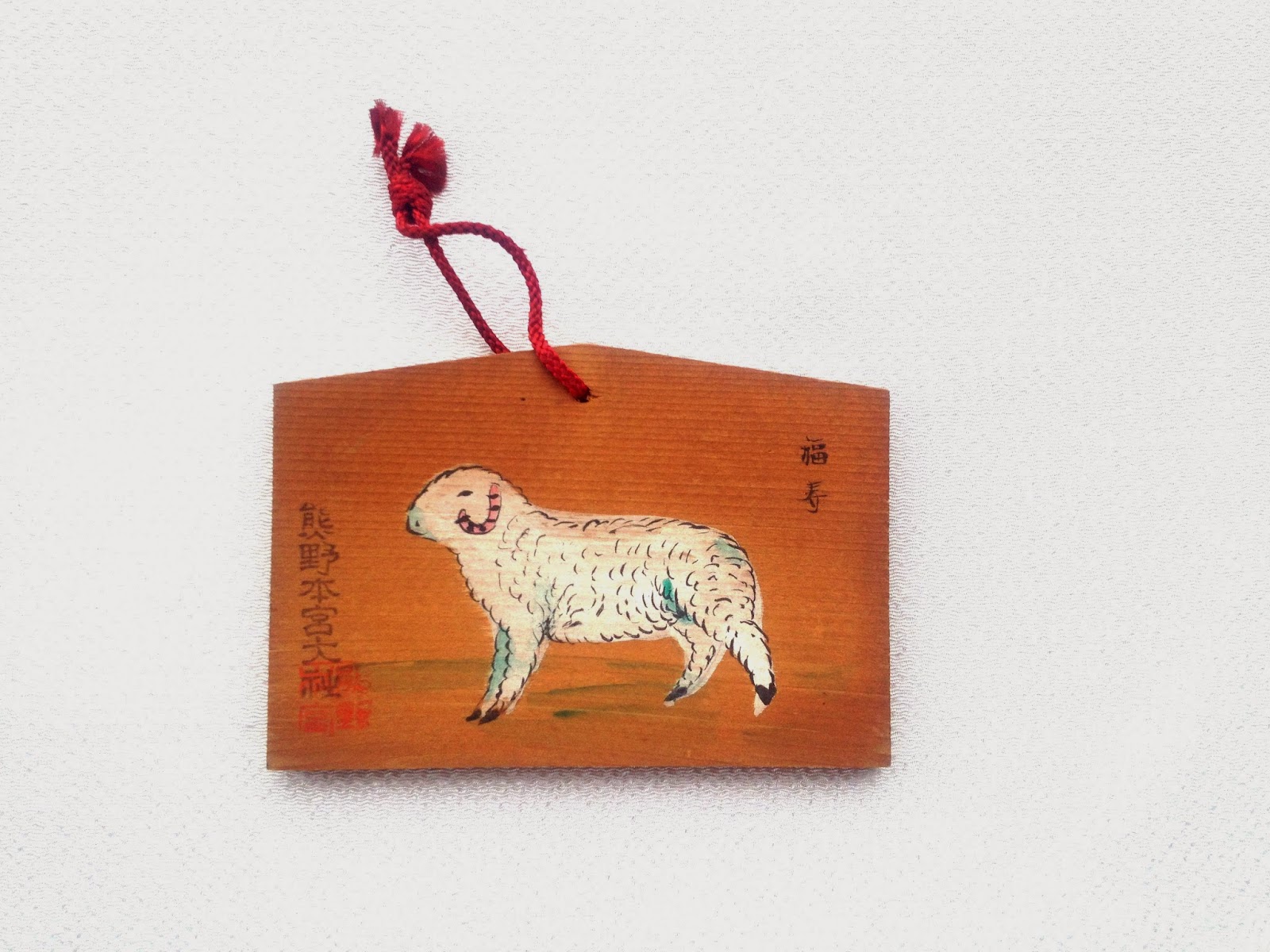
Japanese Wood Plaque EMA Snake Japan E4-16 by VintageFromJapan

Japanese Wood Plaque - EMA - Snake - Japan E4-16 Long and Happy Life


Japanese Wood Plaque EMA Snake Japan E4-16 by VintageFromJapan


This is an "Ema". "Ema" are small wooden plaques on which Shinto worshippers write their prayers or wishes. The ema are then left hanging up at the shrine, where the kami (spirits or gods) receive them. They bear various pictures, often of animals or other Shinto imagery, and many have the word gan'i (願意), meaning "wish", written along the side. In ancient times people would donate horses to the shrines for good favor, over time this was transferred to a wooden plaque with a picture of a horse, and later still to the various wooden plaques sold today for the same purpose.

Ema are sold for various wishes. Common reasons for buying a plaque are for success in work or on exams, marital bliss, to have children, and health. Some shrines specialize in certain types of these plaques, and the larger shrines may offer more than one. Sales of ema help support the shrine financially.

********There are snake and lucky stone as luck charm. 

寿福 jyufuku = long and happy life

It measures about 9.9 cm x 6.8 cm x 0.5 cm. 

**********************************************************
Our Etsy Stores:

Supplies FromJapanWithLove.etsy.com
Vintage VintageFromJapan.etsy.com

We will combine shipping if you buy from any of our stores.
Tuesday, August 5, 2014

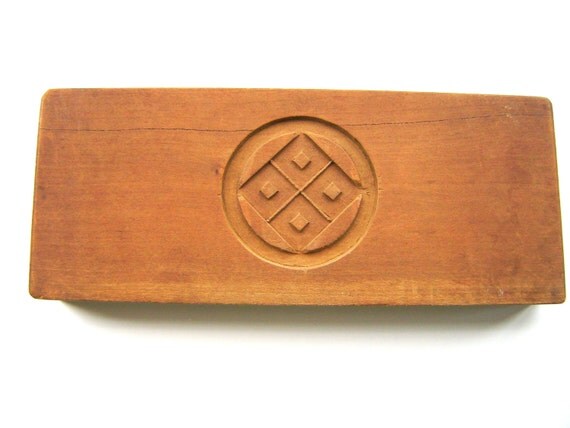
Kashigata Sugar Cake Molds, Cookie Molds in Japan


This is a vintage mold called "kashigata".


Often made of sakura (cherry wood) and seasoned for about 3 years before carving, kashigata were used to make dried confectionery made of rice flour and sugar called rakugan. Earliest records show that this practice dates back to the mid-17th century. These confections were used as offerings and snacks for celebratory occasions and even unfortunate events. For example when a person died, it was expensive to give flowers or fresh food so, people made these sweets in the form of flowers, fish etc. These items were then placed on the "butsudan" (family shrine found in the house) for the dead person.


Kashigata were also used in the making of wagashi (nama-gashi or freshly made cake and hi-gashi or dried confectionery) for tea ceremonies.

Saturday, July 26, 2014

Japanese Furniture Tansu Drawer Front


This is stunning! This is a drawer front from a tansu furniture (Japanese set of drawers). It is in Meiji Period (1868~) and made of Japanese cedar ("Sugi" in Japanese). There is a diamond shape metal work near the keyhole (family crest of family who owned this furniture). It is lacquered . It combined sophisticated style with the highest quality craftsmanship and finest materials to create it. 

There is a lock but no key. There are scratches on the wood and there is rust on the metal but I think it just adds to the charm of it. There are also holes that you can see on the back. They go through to the front but are basically covered by the lock.


We will combine shipping if you buy from any of our stores.
It measures 27 x 23.8 x 2 cm. Given the size, this must be shipped EMS express shipping (which includes both insurance and tracking) .


***********Please look at the pictures carefully and notice the imperfections. 

Please note-if you buy this along with other items, I will weigh the package and refund the extra shipping. Because of the size of this, it is extremely difficult to set a "buy this with another item" price. Thanks for understanding. If you have any questions, please ask. :)


If you are in Africa, please ask for a shipping quote. 

**********************************************************
Our Etsy Stores:

Supplies FromJapanWithLove.etsy.com
Vintage VintageFromJapan.etsy.com

We will combine shipping if you buy from any of our stores.

Sunday, June 8, 2014

wood plaques with sayings in Japan at etsy


wood plaques with sayings in Japan at etsy

This is an "Ema". "Ema" are small wooden plaques on which Shinto worshippers write their prayers or wishes. The ema are then left hanging up at the shrine, where the kami (spirits or gods) receive them. They bear various pictures, often of animals or other Shinto imagery, and many have the word gan'i (願意), meaning "wish", written along the side. In ancient times people would donate horses to the shrines for good favor, over time this was transferred to a wooden plaque with a picture of a horse, and later still to the various wooden plaques sold today for the same purpose.

Ema are sold for various wishes. Common reasons for buying a plaque are for success in work or on exams, marital bliss, to have children, and health. Some shrines specialize in certain types of these plaques, and the larger shrines may offer more than one. Sales of ema help support the shrine financially.

**********************************************************
Our Etsy Stores:

Supplies and more FromJapanWithLove.etsy.com
Vintage VintageFromJapan.etsy.com

We will combine shipping if you buy from any of our stores.

Friday, March 14, 2014

Kashigata Sugar Cake Mold


This is a vintage mold called "kashigata" mold. This is a beautiful Japanese vintage wood sweets mold, sugar cake mold and cookie mold. It is a round, circle design. Kashigata was used in the making of wagashi (nama-gashi or freshly made cake and hi-gashi or dried confectionery) for tea ceremonies.

https://www.etsy.com/listing/168960196/vintage-kashigata-japanese-cake-mold

Often made of sakura (cherry wood) and seasoned for about 3 years before carving, kashigata were used to make dried confectionery made of rice flour and sugar called rakugan. Earliest records show that this practice dates back to the mid-17th century. These confections were used as offerings and snacks for celebratory occasions and even unfortunate events. For example when a person died, it was expensive to give flowers or fresh food so, people made these sweets in the form of flowers, fish etc. These items were then placed on the "butsudan" (family shrine found in the house) for the dead person.

Common kashigata motifs in the Edo era - chrysanthemums, plum blossoms
Meiji Era - spread of western technology - balloons, planes
World War II - national pride heightened - cherry blossoms, battleships - used as gifts for departing troops, ceremonies and commemorative occasions


With the advent of refrigeration, fresh fish replaced rakugan motifs like the sea bream. Sadly today, making offerings for fortunate and unfortunate events is no longer a common practice. This in turn has lessened rakugan demand although they are still found in tea ceremonies and homes. The decrease in kashigata artisans today has made kashigata carving a dying craft making kashigata itself a sought-after collectible.


*You can use this mold as food mold to cook. Please clean thoroughly before using.

**************** This has 3 very famous traditional images in Japan- the lotus leaf, the lotus root and pine.

It measures 27 cm long x 9.5cm at the widest point x 3.5 cm tall. They are 7cm, 5.8 cm and 4.5 cm wide inside. Please note that there is a crack in the cover.


**********************************************************
Our Etsy Stores:

Supplies FromJapanWithLove.etsy.com
Deco Sweet Supplies DecoSweets.etsy.com
Food Rings SouZouCreations.etsy.com
Vintage VintageFromJapan.etsy.com

Saturday, November 2, 2013

Kashigata Japanese Wooden Mold Sugar Cake Mold Cookie Mold at Etsy.com


This is a vintage mold called "kashigata". This is a beautiful Japanese vintage wooden sweets mold, sugar cake mold or cookie mold . It is a plum blossom - flower design. Kashigata was also used in the making of wagashi (nama-gashi or freshly made cake and hi-gashi or dried confectionery) for tea ceremonies.

Often made of sakura (cherry wood) and seasoned for about 3 years before carving, kashigata were used to make dried confectionery made of rice flour and sugar called rakugan. Earliest records show that this practice dates back to the mid-17th century. These confections were used as offerings and snacks for celebratory occasions and even unfortunate events. For example when a person died, it was expensive to give flowers or fresh food so, people made these sweets in the form of flowers, fish etc. These items were then placed on the "butsudan" (family shrine found in the house) for the dead person


Common kashigata motifs in the Edo era - chrysanthemums, plum blossoms
Meiji Era - spread of western technology - balloons, planes
World War II - national pride heightened - cherry blossoms, battleships - used as gifts for departing troops, ceremonies and commemorative occasions


With the advent of refrigeration, fresh fish replaced rakugan motifs like the sea bream. Sadly today, making offerings for fortunate and unfortunate events is no longer a common practice. This in turn has lessened rakugan demand although they are still found in tea ceremonies and homes. The decrease in kashigata artisans today has made kashigata carving a dying craft making kashigata itself a sought-after collectible.


The shape is that of a "kamon" which means a family crest (which crest we don't know). There are no set rules in the design of a kamon. It most commonly consists of a roundel encircling a figure of plant, animal, man-made, natural or celestial objects, all abstracted to various degrees. Religious symbols, geometric shapes and kanji were commonly used as well. These symbols are often found in logos of stores (which help to identify what they sell), sushi restaurants, and on packages of food to lend an air of elegance. Senbei (Japanese crackers) and other traditional Japanese sweets may also use one.

*You can use this mold as food mold to cook. Please clean thoroughly before using.


It measures about 18 cm long x 9 cm wide x 4.3 cm tall. 

**********************************************************
Our Etsy Stores:

Supplies FromJapanWithLove.etsy.com
Deco Sweet Supplies DecoSweets.etsy.com
Food Rings SouZouCreations.etsy.com
Vintage VintageFromJapan.etsy.com


We will combine shipping if you buy from any of our stores.

Sunday, October 14, 2012

Wood Spindle Spool Bobbin in Japan - Vintage From Japan on Etsy

Vintage Japanese Wood Spindle Spool Bobbin (F84) Metal Tip

Vintage Japanese Wood Spindle Spool Bobbin (F84) Metal Tip

Vintage Japanese Wood Spindle Spool Bobbin (F84) Metal Tip

Wood Spindle Spool Bobbin http://www.etsy.com/shop/VintageFromJapan?section_id=10204998

These are beautiful! They are in amazing condition and unlike most of the others we have in this style, there are no holes across the top. They can be used for any kind of project or even displayed.

PLEASE NOTE-each one is the same design but can vary slightly in that the wood can be a bit lighter or a bit darker, the tip is sometimes less rusty or a bit more rusty.

They are 26 cm long.
You get 3 in this set.

**********************************************************
Our Etsy Stores:

Supplies- FromJapanWithLove.etsy.com
Deco Sweet Supplies- DecoSweets.etsy.com
Handmade- SouZouCreations.etsy.com
Vintage- VintageFromJapan.etsy.com


We will combine shipping if you buy from any of our stores.

Monday, August 27, 2012

Wood Box With Drawer

Wood Box With Drawer

http://www.etsy.com/listing/107755304/vintage-japanese-wood-box-with-drawer

I love this box so much I was tempted to keep it! There are 3 divided sections on top and a drawer on the side. As you can see from the picture the lock doesn't work as part of it is missing but otherwise it is a funky little box!

The box measures 17.5 cm wide x 12.5 cm deep x 11.8 cm tall. The three compartments measure 6 x 10.6 cm ,5 x 10.6 cm and 3.5 x 10.6 cm. The drawer is 15 x 10 cm.

**********************************************************
Our Etsy Stores:

Supplies- FromJapanWithLove.etsy.com
Deco Sweet Supplies- DecoSweets.etsy.com
Cute Japanese Food Rings - SouZouCreations.etsy.com
Vintage- VintageFromJapan.etsy.com


We will combine shipping if you buy from any of our stores.

LinkWithin

Related Posts with Thumbnails