Showing posts with label vintage. Show all posts

Friday, November 10, 2017

Ema - Japanese Wood Plaque Kirishima Jingu Shrine Tengu Kagoshima (E9-26)

Japanese Shrine Plaque - Ema - Kagoshima Tengu


Ema - Japanese Wood Plaque Kirishima Jingu Shrine Tengu Kagoshima (E9-26)


This is an "Ema". "Ema" are small wooden plaques on which Shinto worshippers write their prayers or wishes. The ema are then left hanging up at the shrine, where the kami (spirits or gods) receive them. They bear various pictures, often of animals or other Shinto imagery, and many have the word gan'i (願意), meaning "wish", written along the side. In ancient times people would donate horses to the shrines for good favor, over time this was transferred to a wooden plaque with a picture of a horse, and later still to the various wooden plaques sold today for the same purpose.

Ema are sold for various wishes. Common reasons for buying a plaque are for success in work or on exams, marital bliss, to have children, and health. Some shrines specialize in certain types of these plaques, and the larger shrines may offer more than one. Sales of ema help support the shrine financially.

********This Ema is from Kirishima Jingu Kagoshima Prefecture.
Kirishima-Jingū (霧島神宮), also called Takachiho-no-mine-jina (one of the peak of Mount Kirishima and the place of Tenson kōrin) is a Shinto shrine located in Kirishima, Kagoshima prefecture, Japan.
The mountains of Kirishima are an important site in the creation mythology of Japan. It was in this area that the god Ninigi no Mikoto, grandson of the sun goddess Amaterasu, is said to have descended from heaven to rule over the earth.
Ninigi no Mikoto landed on nearby Mt. Takachiho-no-mine bringing with him the three imperial regalia: the sword, the mirror and the gem; symbols of the imperial family. He eventually married a local princess, becoming mortal in the process, and established the lineage of Japanese Emperors.
Devoted to Ninigi no Mikoto, Kirishima Shrine was built during the Muromachi Period on a different site from where it stands today. Since then it has been destroyed numerous times by volcanic eruptions, but always rebuilt. The current shrine was constructed in 1715 where it survives to this day. Its large, beautiful buildings are surrounded by forest and have been declared important cultural property.
The image on the plaque is called a "tengu".
Tengu (天狗, "heavenly dog") are a type of legendary creature found in Japanese folk religion and are also considered a type of Shinto god (kami) or yōkai (supernatural beings). Although they take their name from a dog-like Chinese demon (Tiangou), the tengu were originally thought to take the forms of birds of prey, and they are traditionally depicted with both human and avian characteristics. The earliest tengu were pictured with beaks, but this feature has often been humanized as an unnaturally long nose, which today is widely considered the tengu's defining characteristic in the popular imagination.
Buddhism long held that the tengu were disruptive demons and harbingers of war. Their image gradually softened, however, into one of protective, if still dangerous, spirits of the mountains and forests. Tengu are associated with the ascetic practice of Shugendō, and they are usually depicted in the garb of its followers, the yamabushi.


This Ema is from  the 21st year of the Heisei era (2009)
It measures about 15.5cm x 12cm x 7mm. 

Monday, October 2, 2017

Vintage Japanese Door Pulls - Sliding Door Pulls - Pocket Door Pulls - Vintage Door Pulls - Plum Blossoms Set of 2 (DP6-34)


Vintage Japanese Door Pulls - Sliding Door Pulls - Pocket Door Pulls - Vintage Door Pulls - Plum Blossoms Set of 2 (DP6-34)


These are great vintage Japanese door pulls!! In Japan, sliding doors are very common and these are used in the sliding doors. 

They are from the "昭和" "showa period" . The "showa" period is from 1926-1989.

These would be fabulous as frames for your art, a small dish for teeny tiny objects etc.

They measure 6.5cm. The "hole" measures about 6cm.

To see more Japanese door pulls, please click here http://etsy.me/2bAfgPW

Monday, July 24, 2017

Kawaii Japanese Doll Head Ichimatsu Doll Body Part D15-10 Girl Head

Kawaii Japanese Doll Head Ichimatsu Doll Body Part D15-10 Girl Head


Kawaii Japanese Doll Head Ichimatsu Doll Body Part D15-10 Girl Head


This doll head is for a doll called "ichimatsu" and ichimatsu dolls are the closest thing to the Western idea of a play doll. 

This head is fully finished (the wooden head is completely covered by clay).


It measures:
From the top of the head to the end of the neck is is about 9 cm. 
It is about 19 cm around.

Please look at the pictures carefully- she has some light stains on her face.

For more doll heads, please click here http://etsy.me/2f17Dni

Friday, July 7, 2017

Japanese Print - Woodblock Print - Vintage Japanese Magazine Cut Out - Samurai Bathing Vintage Art Magazine Insert in May 1932


Japanese Print - Woodblock Print - Vintage Japanese Magazine Cut Out - Samurai Bathing Vintage Art Magazine Insert in May 1932


I was so happy to find this print! In this print there are samurai named Hideyoshi and 2 women maids in bath room. This is an insert from a magazine. This print is a special insert in May, 1932 for Art magazine subscribers 

Toyotomi Hideyoshi (February 2, 1536 or March 26, 1537 – September 18, 1598) was a preeminent daimyo, warrior, general and politician of the Sengoku period[1] who is regarded as Japan's second "great unifier."[2] He succeeded his former liege lord, Oda Nobunaga, and brought an end to the Sengoku period. The period of his rule is often called the Momoyama period, named after Hideyoshi's castle. After his death, his young son Hideyori was displaced by Tokugawa Ieyasu.

Hideyoshi is noted for a number of cultural legacies, including the restriction that only members of the samurai class could bear arms. He financed the construction, restoration and rebuilding of many temples standing today in Kyoto. Hideyoshi played an important role in the history of Christianity in Japan when he ordered the execution by crucifixion of twenty-six Christians.

It is in excellent condition but it is vintage so there are some imperfections.

This would be beautiful framed and displayed but it could also be used in mixed media art.

It measures 25 cm x 38.5 cm.

To see more vintage prints, please click here http://etsy.me/2eRcmY7

Monday, March 27, 2017

Japanese Doll Head - Hina Matsuri - Japanese Doll Festival - Boy Head - Man's Head D12-13


Japanese Doll Head - Hina Matsuri - Japanese Doll Festival - Boy Head - Man's Head D12-13


Here is a very cute doll head meant for Hina Matsuri. He is made from clay.

About Hina Matsuri
Platforms with a red hi-mōsen are used to display a set of ornamental dolls (雛人形, hina-ningyō) representing the Emperor, Empress, attendants, and musicians in traditional court dress of the Heian period. The custom of displaying dolls began during the Heian period. Formerly, people believed the dolls possessed the power to contain bad spirits.

He measures about 5 cm long to the end and about 12.5 cm around.

*******he has some marks and scratches on his neck. Please look at the pictures carefully.


For more doll heads, please click here http://etsy.me/2f17Dni

Sunday, February 19, 2017

Vintage Japanese Branding Iron - Yakiin - Yakin - Vintage Branding Iron - Metal Stamp - Ri in Katakana Character S147

Vintage Japanese Branding Iron - Yakiin - Yakin - Vintage Branding Iron - Metal Stamp - Ri in Katakana Character S147


Vintage Japanese Branding Iron - Yakiin - Yakin - Vintage Branding Iron - Metal Stamp - Ri in Katakana Character S147:


This is a vintage branding iron called a yakiin. These were/are used on wood, leather...food...anything you want to brand. Please see the last picture to see an example of how it can be used. I think they would look fabulous if used in pottery as a stamp. Also...I think they could be used with ink but as it is metal, the image wouldnt be as smooth and clear as a rubber stamp -please keep that in mind if that is how you want to use it. Simplified in the Heian period from the manyōgana kanji 利. The katakana syllable リ (ri), whose equivalent in hiragana is り (ri). It is the fortieth syllable of the gojūon order, and its position in gojūon tables is ラ行イ段 (RA-gyō, I-dan; “row RA, section I”). http://en.wiktionary.org/wiki/%E3%83%AA Unlike the hiragana system, used for Japanese language words that kanji does not cover, the katakana syllabary is used primarily for transcription of foreign language words into Japanese and the writing of loan words (collectively gairaigo), as well as to represent onomatopoeia, technical and scientific terms, and the names of plants, animals, and minerals.

Monday, February 13, 2017

Japanese Shrine Wood Plaque Kotohira-gu Kagawa E9-6 Ema Temple Plaque | eBay

Japanese Shrine Wood Plaque Kotohira-gu Kagawa E9-6 Ema Temple Plaque | eBay: Kotohira-gū (金刀比羅宮) is a Shinto shrine in the town of Kotohira in Nakatado District, Kagawa, Japan. Before the Meiji period, Kotohira Shrine was also a Buddhist site as well. Before the Meiji period it was known as Konpira-Daigongen (金比羅大権現), and it stood at the head of the nationwide group of shrines bearing the names Kompira and Kotohira. | eBay!

Monday, December 5, 2016

Vintage Japanese Typewriter Key - Japanese Stamp - Kanji Stamp - Metal Stamp - Chinese Character - Mean - Low

Vintage Japanese Typewriter Key - Japanese Stamp - Kanji Stamp - Metal Stamp - Chinese Character -  Mean - Low


Vintage Japanese Typewriter Key - Japanese Stamp - Kanji Stamp - Metal Stamp - Chinese Character - Mean - Low:


We were lucky to come across a case of these katsuji (Japanese typewriter keys). There are over 2300 of these. They are vintage but have never been used. These would have been the extras in case the ones in the machine broke. Please look at the last picture to see what an old Japanese typewriter looked like. There were at least 2000 keys so needless to say, this was only used in businesses. They are from the 昭和 showa period . The showa period is from 1926-1989 but these are at least 30 years old as Japanese stopped using them once the word processor was invented. This would be perfect for using as a stamp with ink or for stamping clay etc. This stamp is the Kanji (Chinese character) for 鄙 hina / iyashii = mean / low. It measures 2.3 cm long (long enough to be able to get a nice grip) and 5mm wide. The Chinese character itself is about 5mm wide....so please note how tiny it is. It is made of metal. The last picture shows just how many of these keys were in the machine. It is not included. For more typewriter keys, please click here http://etsy.me/2c6YQgQ

Friday, November 18, 2016

Japanese Kimono Bag - Bridal Bag - Japanese Flower Evening Bag - Gold & Orange | eBay


Japanese Kimono Bag - Bridal Bag - Japanese Flower Evening Bag - Gold & Orange | eBay


This is gorgeous and the pictures don't do it justice.  The frame is gold/orange. The main colors are gold, cream and orange.


This is gently used so while it is in great condition it isn't perfect. Please look at the pictures carefully. The frame has signs of wear-there are scratches etc.


It measures about 23 cm x 17 cm.

Friday, October 14, 2016

Vintage Japanese Yakiin - Vintage Branding Iron - Number Five - 5 - Metal Stamp - Kanji Stamp - Chinese Character - Japanese Stamp - F184

Vintage Japanese Yakiin - Vintage Branding Iron - Number Five - 5 - Metal Stamp - Kanji Stamp - Chinese Character - Japanese Stamp - F184


Vintage Japanese Yakiin - Vintage Branding Iron - Number Five - 5 - Metal Stamp - Kanji Stamp - Chinese Character - Japanese Stamp - F184


This is a vintage branding iron called a "yakiin". These were/are used on wood, leather...food...anything you want to brand. Please see the last picture to see an example of how it can be used.

I think they would look fabulous if used in pottery as a stamp. Also...I think they could be used with ink but as it is metal, the image wouldn't be as smooth and clear as a rubber stamp -please keep that in mind if that is how you want to use it.

5 "go" = 5 five.


They are from the "昭和" "showa period" . The "showa" period is from 1926-1989 but these are at least 30 years old.


This is made of iron. Please look at the pictures carefully


It measures 19 cm long x 2 cm (the stamp) wide.


**********************************************************
Our Etsy Stores:

Supplies FromJapanWithLove.etsy.com
Vintage VintageFromJapan.etsy.com

We will combine shipping if you buy from any of our stores.

Tuesday, October 4, 2016

Japanese Temple Wood Plaque - Year of Tiger - Lucky Charm - Yasui Konpiragu - E7-10 - Ema Shrine Plaque

Japanese Temple Wood Plaque - Year of Tiger - Lucky Charm - Yasui Konpiragu - E7-10 - Ema Shrine Plaque


Japanese Temple Wood Plaque - Year of Tiger - Lucky Charm - Yasui Konpiragu - E7-10 - Ema Shrine Plaque


This is an "Ema". "Ema" are small wooden plaques on which Shinto worshippers write their prayers or wishes. The ema are then left hanging up at the shrine, where the kami (spirits or gods) receive them. They bear various pictures, often of animals or other Shinto imagery, and many have the word gan'i (願意), meaning "wish", written along the side. In ancient times people would donate horses to the shrines for good favor, over time this was transferred to a wooden plaque with a picture of a horse, and later still to the various wooden plaques sold today for the same purpose.

Ema are sold for various wishes. Common reasons for buying a plaque are for success in work or on exams, marital bliss, to have children, and health. Some shrines specialize in certain types of these plaques, and the larger shrines may offer more than one. Sales of ema help support the shrine financially.

******** This Ema is from Yasui Konpira Shrine , Japan.

The history of the shrine begins at the time of reign of the 38th Emperor Tenchi (668 to 671 C.E.), when Kamatari Fujiwara established the shrine, to pray for prosperity of the clan and eternal continuation of his descendants. planted purple wisteria and called it Fujidera (The Temple of Wisteria).

 The 75th Emperor Sutoku ( reigned 1123-1141) who was especially fond of this wisteria, repaired the temple buildings in 1146 and had his favorite consort Awa no Naishi live there.

 The retired emperor Sutoku was defeated during the Hogen Rebellion (1156) and passed away in the land of Sanuki (present day Kagawa Prefecture). His consort Awa no Naishi worshipped in the Kannon Hall of the temple the portrait, drawn in his own hand, that she had received from the emperor.

 In 1177, when a Buddhist priest Daien stayed in the temple, the emperor Sutoku appeared before him, showing him a vision of the prosperity of ancient times. This event was immediately reported to the monk-emperor Goshirakawa and the Kanshōji, that was built by his imperial order, is said to be the origin of our shrine.

 The temple Kōmyōin Kanshōji was devastated by fire spread by armies during the Ōnin Rebellion (1467-1477). However in 1695, the Rengekōin, originally located at Uzumasa Yasui (Ukyo Ward of Kyoto City) was moved to the present site. As shrine deities, alonside the emperor Sutoku, Ōmononushi no Kami (transferred from Konpira Shrine in the land of Sanuki) and prince Yorimasa Minamoto were enshrined here. The shrine then became known as “Yasui Konpiragu”.

After the Meiji Restoration (1868) the name Rengekōin was abandoned and the name of the shrine was changed first to “ Yasui Jinja” and later to “ Yasui Konpiragu” by which it is known today.

For more information and great pictures please see
http://www.greenshinto.com/wp/2013/10/15/yasui-konpira-festival/
http://thekyotoproject.org/english/yasui-shrine/

It measures 14.5cm x 9.5 cmx 8mm.

Monday, September 26, 2016

Vintage Japanese Wood Spindles - Vintage Spool - Vintage Bobbins - Japanese Vintage Spindles - 1 Hole (S390) Set of 2


Vintage Japanese Wood Spindles - Vintage Spool - Vintage Bobbins - Japanese Vintage Spindles - 1 Hole (S390) Set of 2


These are beautiful! They are in amazing condition and unlike most of the others we have in this style, there is only 1 hole across the top. They can be used for any kind of project or even displayed.


They are 19 cm long. You get 2 in this set.


**********************************************************
Our Etsy Stores:

Supplies- FromJapanWithLove.etsy.com
Deco Sweet Supplies- DecoSweets.etsy.com
Handmade- SouZouCreations.etsy.com
Vintage- VintageFromJapan.etsy.com


We will combine shipping if you buy from any of our stores.

Friday, September 23, 2016

Vintage Japanese Wood Cake Mold - Kashigata - Japanese Cake Mold - Wood Cake Mold - Opening Ceremony - Inaugural Meeting

Vintage Japanese Wood Cake Mold - Kashigata - Japanese Cake Mold - Wood Cake Mold - Opening Ceremony - Inaugural Meeting


Vintage Japanese Wood Cake Mold - Kashigata - Japanese Cake Mold - Wood Cake Mold - Opening Ceremony - Inaugural Meeting


This is a vintage mold called "kashigata". Kashigata was used in the making of wagashi (nama-gashi or freshly made cake and hi-gashi or dried confectionery) for tea ceremonies. You can use this mold as food mold to cook. Please clean thoroughly before using.

發會式 hakkai shiki = an opening [inaugural] ceremony [meeting]

It measures 10.5cm long x 4cm wide x 1cm tall.

Often made of sakura (cherry wood) and seasoned for about 3 years before carving, kashigata were used to make dried confectionery made of rice flour and sugar called rakugan. Earliest records show that this practice dates back to the mid-17th century. These confections were used as offerings and snacks for celebratory occasions and even unfortunate events. For example when a person died, it was expensive to give flowers or fresh food so, people made these sweets in the form of flowers, fish etc. These items were then placed on the "butsudan" (family shrine found in the house) for the dead person.

Common kashigata motifs in the Edo era - chrysanthemums, plum blossoms
Meiji Era - spread of western technology - balloons, planes
World War II - national pride heightened - cherry blossoms, battleships - used as gifts for departing troops, ceremonies and commemorative occasions

With the advent of refrigeration, fresh fish replaced rakugan motifs like the sea bream. Sadly today, making offerings for fortunate and unfortunate events is no longer a common practice. This in turn has lessened rakugan demand although they are still found in tea ceremonies and homes. The decrease in kashigata artisans today has made kashigata carving a dying craft making kashigata itself a sought-after collectible.

**********************************************************
Other Kashigata Molds available on our Etsy store

https://www.etsy.com/shop/vintagefromjapan?section_id=6167895


We will combine shipping if you buy from any of our stores.

Friday, September 16, 2016

Wood And Metal Stamps - Mixed Set of 20 - Shapes Arrows And Other Stamps (Set 2)

Wood And Metal Stamps - Mixed Set of 20 - Shapes Arrows And Other Stamps (Set 2)


Wood And Metal Stamps - Mixed Set of 20 - Shapes Arrows And Other Stamps (Set 2)


This is a set of stamps that are mostly shapes likes arrows, pipes etc. Some are large and some are quite small.Mostly they are metal and wood. 


They vary in size but the largest is 3 x 2.6 cm and the smallest is 5mm wide.

It is vintage and therefore, not perfect. Please look at the pictures carefully.

This vintage wood stamp is from the "昭和" "showa period" . The "showa" period is from 1926-1989 but these are at least 20 years old. 


**********************************************************
Our Etsy Stores:

Supplies FromJapanWithLove.etsy.com
Vintage VintageFromJapan.etsy.com

We will combine shipping if you buy from any of our stores.

Friday, September 9, 2016

Vintage Japanese Typewriter Key - Japanese Stamp - Kanji Stamp - Chinese Character - Vintage Stamp - mat - matting - rush mat

Vintage Japanese Typewriter Key - Japanese Stamp - Kanji Stamp - Chinese Character - Vintage Stamp -  mat - matting - rush mat


Vintage Japanese Typewriter Key - Japanese Stamp - Kanji Stamp - Chinese Character - Vintage Stamp - mat - matting - rush mat


We were lucky to come across a case of these "katsuji" (Japanese typewriter keys). There are over 2300 of these. They are vintage but have never been used. These would have been the extras in case the ones in the machine broke. Please look at the last picture to see what an old Japanese typewriter looked like. There were at least 2000 keys so needless to say, this was only used in businesses.

They are from the "昭和" "showa period" . The "showa" period is from 1926-1989 but these are at least 30 years old as Japanese stopped using them once the word processor was invented.

This would be perfect for using as a stamp with ink or for stamping clay etc.

This stamp is the Kanji (Chinese character) for "go" = "mat; matting; rush mat".

It measures 2.3 cm long (long enough to be able to get a nice grip) and 5mm wide. The Chinese character itself is about 5mm wide....so please note how tiny it is. It is made of metal.

**********************************************************
Our Etsy Store:

Supplies and more http://FromJapanWithLove.etsy.com

We will combine shipping if you buy from any of our stores.

instagram @fromjapanwithlove

twitter @fromjapanwithlo

Thursday, September 8, 2016

Gorgeous Vintage Snow Print


I was so happy to find this print! In this print there are pine trees and houses covered with white snow. This is a magazine insert. The original one was painted by Suzuki Shounen.

松年 shounen
山水画譜 sansui gafu = Landscape Painting Manual
十ニ 12th

This is in excellent condition but it is vintage so there are imperfections.

This would be perfect for decorating it on the wall at home.

It measures about 27 cm long x 20.7 cm wide.

To see other vintage Japanese prints please click here http://etsy.me/2cBDCvC

Monday, September 5, 2016

Japanese Beaded Bag Japanese Evening Bag Black & Gold Beaded Evening Bag

Japanese-Beaded-Bag-Japanese-Evening-Bag-Black-Gold-Beaded-Evening-Bag


Japanese Beaded Bag Japanese Evening Bag Black & Gold Beaded Evening Bag


This is gorgeous and the pictures don't do it justice.  It can be both a clutch and a bag with a long strap. It closes with a magnetic closure.


This is gently used so while it is in great condition it isn't perfect. Please look at the pictures carefully.


It measures about 20.5 cm wide x 13 cm (about56.5 cm including the gold chain strap).

Japanese Door Pulls - Sliding Door Pulls - Pocket Door Pulls - Door Pull Set of 2 Rectangles Brown Orange (A53) Small Size

Japanese Door Pulls - Sliding Door Pulls - Pocket Door Pulls - Door Pull Set of 2 Rectangles Brown Orange (A53) Small Size


Japanese Door Pulls - Sliding Door Pulls - Pocket Door Pulls - Door Pull Set of 2 Rectangles Brown Orange (A53) Small Size


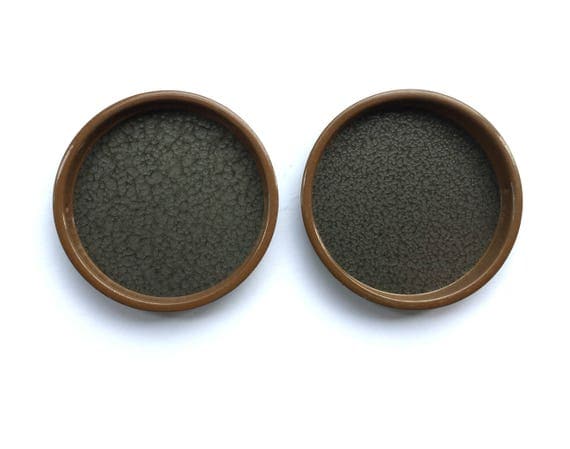
These are great vintage Japanese door pulls!! In Japan, sliding doors are very common and these are used in the sliding doors.

They are from the "昭和" "showa period" . The "showa" period is from 1926-1989.

These would be fabulous as frames for your art, a small dish for teeny tiny objects etc.

They measure 3.4 x 5 cm .The "hole" measures about 2.8 x 2.5 cm. You get 2 in this set.

To see more Japanese door pulls, please click here http://etsy.me/2bAfgPW

**********************************************************
Our Etsy Stores:

Supplies FromJapanWithLove.etsy.com
Vintage VintageFromJapan.etsy.com

We will combine shipping if you buy from any of our stores.

Friday, September 2, 2016

Japanese Ceramic Bell - Dorei - Suzu - Amulet - Lucky Charm - Vintage Bell - Nagoya Castle in Nagoya - Migawari Omamori (B1-23)

Japanese Ceramic Bell - Dorei - Suzu - Amulet - Lucky Charm - Vintage Bell - Nagoya Castle in Nagoya - Migawari Omamori (B1-23)


Japanese Ceramic Bell - Dorei - Suzu - Amulet - Lucky Charm - Vintage Bell - Nagoya Castle in Nagoya - Migawari Omamori (B1-23)


This is a ceramic bell called 土鈴 "dorei". 鈴 is "Suzu" which means bell and 土 is "do" which means earth, soil and is part of 粘土 meaning clay. So...this is a clay/ceramic bell. These bells have a ceramic ball inside so the sound is a coarse, rolling sound. 

Bells of all kinds, have a long history in Japan. Dorei (ceramic bells) date back to the prehistoric Jomon Era (10,000 B.C.-300 B.C.). These bells were used to scare away evil. At Shinto shrines, large bells drape over entrances, as it is said that ringing them calls gets the attention of the Gods allowing one to acquire positive power and authority, while repelling evil.

This is a "migawari suzu" which is a type of "omamori". Omamori are amulets - they are physical objects that contain the spiritual essence and powers of a deity or buddha . " Migawari Omamori" (身代わりお守り,means that the item takes the place of the person...so the bad luck is transferred, in this case, to the bell.

For a fabulous and interesting read on omamori please see http://www.tofugu.com/2014/06/25/omamori-protecting-yourself-in-little-ways/


This bell is from Nagoya Castle (名古屋城 Nagoya-jo) - a Japanese castle located in Nagoya, central Japan. During the Edo period, Nagoya Castle was the centre of one of the most important castle towns in Japan—Nagoya-juku— and it included the most important stops along the Minoji, which linked the Tōkaidō with the Nakasendo.

https://en.wikipedia.org/wiki/Nagoya_Castle

This bell is about 11 cm high (including rope loop) and about 6 cm wide.

This will be will padded and shipped in a box.

LinkWithin

Related Posts with Thumbnails