Showing posts with label housewares. Show all posts

Wednesday, December 7, 2011

Vintage Japanese Wood Stamp S397 by vintagefromjapan on Etsy

Media_httpimg3etsysta_ceogb

Vintage Japanese Wood Stamp S397 by vintagefromjapan on Etsy

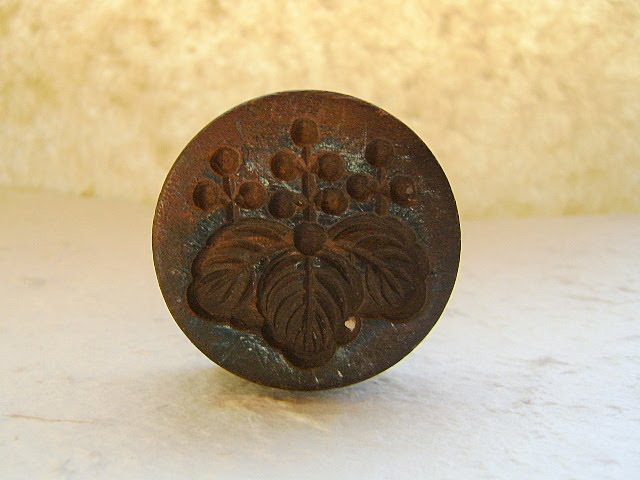
We have a box of these wood stamps. They are all hand carved and none of them can be read. They were carved in old Japanese "shodou" or calligraphy. I asked many Japanese people and no one could read them. While no one can understand them, they can still be used to decorate your handmade creation or even just displayed as they are quite unique and beautiful.

It is from the "昭和" "showa period". The "showa" period is from 1926-1989 but we believe it is from the1970's.

It measures 4cm wide x 15 cm long.

http://www.etsy.com/listing/87921704/vintage-japanese-wood-stamp-s397

Friday, June 11, 2010

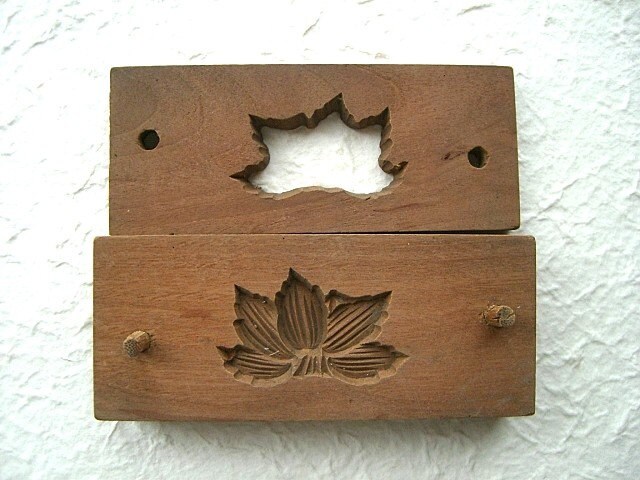
Vintage Japanese Wood Kashigata Stencil - Pine Tree


This was an amazing find. This is called "型紙" or "katagami". This is a stencil that was used to make "kashigata"

This one is made from wood. It is the image of "matsu" or pine tree. It is in fabulous condition.

This stencil could be used but it would also be fabulous framed and hung on a wall.

This stencil measures 18.3 x 8.8 cm.


More information on "kashigata" (the sweets made from the molds that were made using the stencils).Kashigata were used to make dried confectionery made of rice flour and sugar called rakugan. Earliest records show that this practice dates back to the mid-17th century. These confections were used as offerings and snacks for celebratory occasions and even unfortunate events. For example when a person died, it was expensive to give flowers or fresh food so, people made these sweets in the form of flowers, fish etc. These items were then placed on the "butsudan" (family shrine found in the house) for the dead person.


Kashigata were also used in the making of wagashi (nama-gashi or freshly made cake and hi-gashi or dried confectionery) for tea ceremonies.


Common kashigata motifs in the Edo era - chrysanthemums, plum blossoms
Meiji Era - spread of western technology - balloons, planes
World War II - national pride heightened - cherry blossoms, battleships - used as gifts for departing troops, ceremonies and commemorative occasions


With the advent of refrigeration, fresh fish replaced rakugan motifs like the sea bream. Sadly today, making offerings for fortunate and unfortunate events is no longer a common practice. This in turn has lessened rakugan demand although they are still found in tea ceremonies and homes. The decrease in kashigata artisans today has made kashigata carving a dying craft making kashigata itself a sought-after collectible.

http://www.etsy.com/listing/40271001/vintage-japanese-wood-kashigata-stencil

Tuesday, April 6, 2010

Kashigata - Vintage Japanese Sugar Cake Mold on Etsy

Kashigata - Vintage Japanese Sugar Cake Mold on Etsy


Vintage Japanese Kashigata Sweets Mold - Grape - Budou (P) $32.5
http://www.etsy.com/view_listing.php?listing_id=42118536


Vintage Japanese Kashigata Sweets Mold - Bamboo Leaf $32.5
http://www.etsy.com/view_listing.php?listing_id=41030070


Vintage Japanese Kashigata Sweets Mold Cherry Blossoms $22.5
http://www.etsy.com/view_listing.php?listing_id=44050657


This is a vintage mold called "kashigata". Kashigata were also used in the making of wagashi (nama-gashi or freshly made cake and hi-gashi or dried confectionery) for tea ceremonies.

Common kashigata motifs in the Edo era - chrysanthemums, plum blossoms

Meiji Era - spread of western technology - balloons, planes
World War II - national pride heightened - cherry blossoms, battleships - used as gifts for departing troops, ceremonies and commemorative occasions

With the advent of refrigeration, fresh fish replaced rakugan motifs like the sea bream. Sadly today, making offerings for fortunate and unfortunate events is no longer a common practice. This in turn has lessened rakugan demand although they are still found in tea ceremonies and homes. The decrease in kashigata artisans today has made kashigata carving a dying craft making kashigata itself a sought-after collectible.

*You can use this mold as food mold to cook. Please clean thoroughly before using. As you can see, there are some parts cracked / split. This is a vintage sweets mold as you know.

Wednesday, March 10, 2010

Vintage Japanese Kashigata Sweets Mold Berry by vintagefromjapan

Vintage Japanese Kashigata Sweets Mold - Berry 8 (P)

Vintage Japanese Kashigata Sweets Mold - Berry 8  (P)

http://www.etsy.com/view_listing.php?listing_id=42411018

This is a vintage mold called "kashigata".

Often made of sakura (cherry wood) and seasoned for about 3 years before carving, kashigata were used to make dried confectionery made of rice flour and sugar called rakugan. Earliest records show that this practice dates back to the mid-17th century. These confections were used as offerings and snacks for celebratory occasions and even unfortunate events. For example when a person died, it was expensive to give flowers or fresh food so, people made these sweets in the form of flowers, fish etc. These items were then placed on the "butsudan" (family shrine found in the house) for the dead person.

Kashigata were also used in the making of wagashi (nama-gashi or freshly made cake and hi-gashi or dried confectionery) for tea ceremonies.

Common kashigata motifs in the Edo era - chrysanthemums, plum blossoms Meiji Era - spread of western technology - balloons, planes World War II - national pride heightened - cherry blossoms, battleships - used as gifts for departing troops, ceremonies and commemorative occasions

With the advent of refrigeration, fresh fish replaced rakugan motifs like the sea bream. Sadly today, making offerings for fortunate and unfortunate events is no longer a common practice. This in turn has lessened rakugan demand although they are still found in tea ceremonies and homes. The decrease in kashigata artisans today has made kashigata carving a dying craft making kashigata itself a sought-after collectible.

*You can use this mold as food mold to cook. Please clean thoroughly before using.

It measures 17.3 cm long x 10.5 cm wide x 3.2 cm tall. Inside it measures 11.5 cm long x 7.5 cm wide.

Posted via web from fromjapanwithlove's posterous

Sunday, March 7, 2010

Vintage Japanese Kashigata Sweets Mold Grape by vintagefromjapan

Vintage Japanese Kashigata Sweets Mold - Grape - Budou (P)

Vintage Japanese Kashigata Sweets Mold - Grape - Budou (P)

This is a vintage mold called "kashigata".

Often made of sakura (cherry wood) and seasoned for about 3 years before carving, kashigata were used to make dried confectionery made of rice flour and sugar called rakugan. Earliest records show that this practice dates back to the mid-17th century. These confections were used as offerings and snacks for celebratory occasions and even unfortunate events. For example when a person died, it was expensive to give flowers or fresh food so, people made these sweets in the form of flowers, fish etc. These items were then placed on the "butsudan" (family shrine found in the house) for the dead person.

Kashigata were also used in the making of wagashi (nama-gashi or freshly made cake and hi-gashi or dried confectionery) for tea ceremonies.

Common kashigata motifs in the Edo era - chrysanthemums, plum blossoms Meiji Era - spread of western technology - balloons, planes World War II - national pride heightened - cherry blossoms, battleships - used as gifts for departing troops, ceremonies and commemorative occasions

With the advent of refrigeration, fresh fish replaced rakugan motifs like the sea bream. Sadly today, making offerings for fortunate and unfortunate events is no longer a common practice. This in turn has lessened rakugan demand although they are still found in tea ceremonies and homes. The decrease in kashigata artisans today has made kashigata carving a dying craft making kashigata itself a sought-after collectible.

*You can use this mold as food mold to cook. Please clean thoroughly before using.

It measures 16.2 cm long x 9.6 cm wide x 4.2 cm tall. Inside it measures 9.6 cm long x 6 cm wide.

http://www.etsy.com/view_listing.php?listing_id=42118536

Posted via web from fromjapanwithlove's posterous

Monday, March 1, 2010

Vintage Japanese Sweets Mold Kashigata Plum by vintagefromjapan

Vintage Japanese Sweets Mold - Kashigata - Plum Blossoms And Kanji (P)

Vintage Japanese Sweets Mold - Kashigata - Plum Blossoms And Kanji (P)

This is a vintage mold called "kashigata".

Often made of sakura (cherry wood) and seasoned for about 3 years before carving, kashigata were used to make dried confectionery made of rice flour and sugar called rakugan. Earliest records show that this practice dates back to the mid-17th century. These confections were used as offerings and snacks for celebratory occasions and even unfortunate events. For example when a person died, it was expensive to give flowers or fresh food so, people made these sweets in the form of flowers, fish etc. These items were then placed on the "butsudan" (family shrine found in the house) for the dead person.

Kashigata were also used in the making of wagashi (nama-gashi or freshly made cake and hi-gashi or dried confectionery) for tea ceremonies.

Common kashigata motifs in the Edo era - chrysanthemums, plum blossoms Meiji Era - spread of western technology - balloons, planes World War II - national pride heightened - cherry blossoms, battleships - used as gifts for departing troops, ceremonies and commemorative occasions

With the advent of refrigeration, fresh fish replaced rakugan motifs like the sea bream. Sadly today, making offerings for fortunate and unfortunate events is no longer a common practice. This in turn has lessened rakugan demand although they are still found in tea ceremonies and homes. The decrease in kashigata artisans today has made kashigata carving a dying craft making kashigata itself a sought-after collectible.

*You can use this mold as food mold to cook. Please clean thoroughly before using.

Kanji (chinese writing characters) says "教" "kyou"which means teach, class.

It measures 41 cm long x 5.7 cm wide 1.7 cm tall. Inside they measure 4cm wide each.

http://www.etsy.com/view_listing.php?listing_id=41726796

Posted via web from fromjapanwithlove's posterous

Tuesday, February 16, 2010

Vintage Japanese Kashigata Sweets Mold Gourd by vintagefromjapan

Vintage Japanese Kashigata Sweets Mold - Gourd (P)

Vintage Japanese Kashigata Sweets Mold - Gourd (P)

This is a vintage mold called "kashigata".

Often made of sakura (cherry wood) and seasoned for about 3 years before carving, kashigata were used to make dried confectionery made of rice flour and sugar called rakugan. Earliest records show that this practice dates back to the mid-17th century. These confections were used as offerings and snacks for celebratory occasions and even unfortunate events. For example when a person died, it was expensive to give flowers or fresh food so, people made these sweets in the form of flowers, fish etc. These items were then placed on the "butsudan" (family shrine found in the house) for the dead person.

Kashigata were also used in the making of wagashi (nama-gashi or freshly made cake and hi-gashi or dried confectionery) for tea ceremonies.

Common kashigata motifs in the Edo era - chrysanthemums, plum blossoms Meiji Era - spread of western technology - balloons, planes World War II - national pride heightened - cherry blossoms, battleships - used as gifts for departing troops, ceremonies and commemorative occasions

With the advent of refrigeration, fresh fish replaced rakugan motifs like the sea bream. Sadly today, making offerings for fortunate and unfortunate events is no longer a common practice. This in turn has lessened rakugan demand although they are still found in tea ceremonies and homes. The decrease in kashigata artisans today has made kashigata carving a dying craft making kashigata itself a sought-after collectible.

*You can use this mold as food mold to cook. Please clean thoroughly before using.

It measures 16.4 cm long x 8.3 cm wide x 3.7 cm tall. Inside it measures 10.5 cm long x 4.8 cm wide.

http://www.etsy.com/view_listing.php?listing_id=40816233

Posted via web from fromjapanwithlove's posterous

Saturday, February 13, 2010

Vintage Japanese Sweets Mold Double Sided by vintagefromjapan

Vintage Japanese Sweets Mold - Double Sided Kashigata Kiku Chrysanthemum Leaf (P)

Vintage Japanese Sweets Mold -  Double Sided  Kashigata Kiku Chrysanthemum  Leaf (P)

This is a vintage mold called "kashigata". This is a great find! There is a chrysanthemum on one side and a leaf on the other!

Often made of sakura (cherry wood) and seasoned for about 3 years before carving, kashigata were used to make dried confectionery made of rice flour and sugar called rakugan. Earliest records show that this practice dates back to the mid-17th century. These confections were used as offerings and snacks for celebratory occasions and even unfortunate events. For example when a person died, it was expensive to give flowers or fresh food so, people made these sweets in the form of flowers, fish etc. These items were then placed on the "butsudan" (family shrine found in the house) for the dead person.

Kashigata were also used in the making of wagashi (nama-gashi or freshly made cake and hi-gashi or dried confectionery) for tea ceremonies.

Common kashigata motifs in the Edo era - chrysanthemums, plum blossoms Meiji Era - spread of western technology - balloons, planes World War II - national pride heightened - cherry blossoms, battleships - used as gifts for departing troops, ceremonies and commemorative occasions

With the advent of refrigeration, fresh fish replaced rakugan motifs like the sea bream. Sadly today, making offerings for fortunate and unfortunate events is no longer a common practice. This in turn has lessened rakugan demand although they are still found in tea ceremonies and homes. The decrease in kashigata artisans today has made kashigata carving a dying craft making kashigata itself a sought-after collectible.

*You can use this mold as food mold to cook. Please clean thoroughly before using.

It measures 15cm long x 10 cm wide x 2.5 cm tall.The chrysanthemum measures 10 x 7.5 and the leaf is 6 x 3.8.

http://www.etsy.com/view_listing.php?listing_id=40572494

Posted via web from fromjapanwithlove's posterous

Sunday, February 7, 2010

Vintage Japanese Kashigata Sweets Mold Lotus by vintagefromjapan

Vintage Japanese Kashigata Sweets Mold - Lotus Leaf Mini Size (P)

Vintage Japanese Kashigata Sweets Mold - Lotus Leaf Mini Size (P)

This is a vintage mold called "kashigata".

Often made of sakura (cherry wood) and seasoned for about 3 years before carving, kashigata were used to make dried confectionery made of rice flour and sugar called rakugan. Earliest records show that this practice dates back to the mid-17th century. These confections were used as offerings and snacks for celebratory occasions and even unfortunate events. For example when a person died, it was expensive to give flowers or fresh food so, people made these sweets in the form of flowers, fish etc. These items were then placed on the "butsudan" (family shrine found in the house) for the dead person.

Kashigata were also used in the making of wagashi (nama-gashi or freshly made cake and hi-gashi or dried confectionery) for tea ceremonies.

Common kashigata motifs in the Edo era - chrysanthemums, plum blossoms Meiji Era - spread of western technology - balloons, planes World War II - national pride heightened - cherry blossoms, battleships - used as gifts for departing troops, ceremonies and commemorative occasions

With the advent of refrigeration, fresh fish replaced rakugan motifs like the sea bream. Sadly today, making offerings for fortunate and unfortunate events is no longer a common practice. This in turn has lessened rakugan demand although they are still found in tea ceremonies and homes. The decrease in kashigata artisans today has made kashigata carving a dying craft making kashigata itself a sought-after collectible.

*You can use this mold as food mold to cook. Please clean thoroughly before using.

10.2cm x 4.3cm x H2.7cm and inside : 3cm wide

http://www.etsy.com/view_listing.php?listing_id=37752249

Posted via web from fromjapanwithlove's posterous

Wednesday, February 3, 2010

Vintage Japanese Plates Plum Blossoms by vintagefromjapan on Etsy

Vintage Japanese Plates-Plum Blossoms

Vintage Japanese Plates-Plum Blossoms

This is a very beautiful set! There are 5 plates with plum blossoms. These are perfect for serving small side dishes, sweets, small dinner rolls etc.

All measure 13cm.

These are heavy and breakable so they will be carefully packed and sent in a box-this is why the shipping charges are more.

http://www.etsy.com/view_listing.php?listing_id=27707569

Posted via web from fromjapanwithlove's posterous

Sunday, November 29, 2009

Vintage Japanese Sweets Mold Kashigata Sea by vintagefromjapan

This is a vintage mold called "kashigata".

In the past, when a person died, it was expensive to give flowers or fresh food so, people made sweets (these are made from soy flour, rice flour and sugar) in the form of flowers, fish etc. These items were then placed on the "butsudan" (family shrine found in the house) for the dead person.

The sweets are for decoration only.

On this mold is a plum blossom sweets mold.

*You can use this mold as food mold to cook.

The details on this mold are really amazing.

It measures 9.5 cm long x 15 cm wide x 3.7 cm tall. Inside it measures 9 x 6.9cm.

http://www.etsy.com/view_listing.php?listing_id=35527682

Posted via web from fromjapanwithlove's posterous

Tuesday, October 13, 2009

Vintage Japanese Sweets Mold - Banana -Kashigata

http://ny-image2.etsy.com/il_fullxfull.95090202.jpg

http://ny-image1.etsy.com/il_fullxfull.95090093.jpg

$32.50 USD http://www.etsy.com/view_listing.php?listing_id=32312127

This is a vintage mold called "kashigata".

In the past, when a person died, it was expensive to give flowers or fresh food so, people made sweets (these are made from soy flour, rice flour and sugar) in the form of flowers, fish etc. These items were then placed on the "butsudan" (family shrine found in the house) for the dead person. The sweets are for decoration only.

*You can use this mold as food mold to cook.Please clean thoroughly before using.

It measures 18 cm long x 9 cm wide x 3.8 cm tall.Inside it measures 13 cm long x 5.9 cm wide.

Posted via web from fromjapanwithlove's posterous

LinkWithin

Related Posts with Thumbnails