Showing posts with label food stencil. Show all posts

Saturday, August 25, 2012

Katagami Stencils for Kashigata Mold Making 型紙 菓子型

Katagami

Katagami Stencils for Kashigata Mold Making 型紙 菓子型

http://www.etsy.com/shop/VintageFromJapan?section_id=6263764

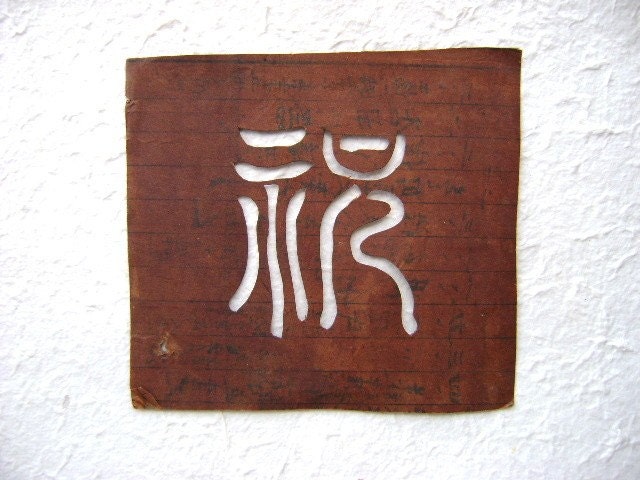
This was an amazing find. They are from the "昭和" "showa period" . The "showa" period is from 1926-1989 but these are at about 25-30 years old . This is called "型紙" or "katagami". This is a stencil that was used to make "kashigata" or "菓子型" (for more information on "kashigata please see below).

This is really gorgeous! The shape is that of a "kamon" which means a family crest (which crest we don't know). There are no set rules in the design of a kamon. It most commonly consists of a roundel encircling a figure of plant, animal, man-made, natural or celestial objects, all abstracted to various degrees. Religious symbols, geometric shapes and kanji were commonly used as well. These symbols are often found in logos of stores (which help to identify what they sell), sushi restaurants, and on packages of food to lend an air of elegance. Senbei (Japanese crackers) and other traditional Japanese sweets may also use one.


This one is made from paper-but not flimsy normal paper....this is wonderful thick Japanese paper and it is in fabulous condition.

This stencil could be used but it would also be fabulous framed and hung on a wall.

The stencil measures about 9 x 9.5 cm.

Wednesday, May 23, 2012

Vintage Japanese Stencil Family Crest Kamon Stencil C9 by VintageFromJapan on Etsy

Media_httpimg0ecetsys_jdnbf

Vintage Japanese Stencil Family Crest Kamon Stencil C9 by VintageFromJapan on Etsy http://www.etsy.com/listing/100242379/vintage-japanese-stencil-family-crest

This was an amazing find. They are from the "昭和" "showa period" . The "showa" period is from 1926-1989 but these are at about 25-30 years old . This is called "型紙" or "katagami". This is a stencil that was used to make "kashigata" (for more information on "kashigata please see below).

This is really gorgeous! The shape is that of a "kamon" which means a family crest (which crest we don't know). There are no set rules in the design of a kamon. It most commonly consists of a roundel encircling a figure of plant, animal, man-made, natural or celestial objects, all abstracted to various degrees. Religious symbols, geometric shapes and kanji were commonly used as well. These symbols are often found in logos of stores (which help to identify what they sell), sushi restaurants, and on packages of food to lend an air of elegance. Senbei (Japanese crackers) and other traditional Japanese sweets may also use one.

Wednesday, November 2, 2011

Vintage Japanese Stencil Family Crest Kamon by vintagefromjapan

Media_httpimg0etsysta_iwzev

This was an amazing find. They are from the "昭和" "showa period" . The "showa" period is from 1926-1989 but these are at about 25-30 years old . This is called "型紙" or "katagami". This is a stencil that was used to make "kashigata" (for more information on "kashigata please see below).

This is really gorgeous! The shape is that of a "kamon" which means a family crest (which crest we don't know). There are no set rules in the design of a kamon. It most commonly consists of a roundel encircling a figure of plant, animal, man-made, natural or celestial objects, all abstracted to various degrees. Religious symbols, geometric shapes and kanji were commonly used as well. These symbols are often found in logos of stores (which help to identify what they sell), sushi restaurants, and on packages of food to lend an air of elegance. Senbei (Japanese crackers) and other traditional Japanese sweets may also use one.

This one is made from paper-but not flimsy normal paper....this is wonderful thick Japanese paper and it is in fabulous condition.

This stencil could be used but it would also be fabulous framed and hung on a wall.

The stencil measures about 9 x 9.5 cm.

More information on "kashigata" (the sweets made from the molds that were made using the stencils).

In the past, when a person died, it was expensive to give flowers or fresh food so, people made sweets (these are made from soy flour, rice flour and sugar) in the form of flowers, fish etc. These items were then placed on the "butsudan" (family shrine found in the house) for the dead person.

The sweets was also used for holiday celebrations, tea ceremony etc. These are for decoration only-they are never eaten.

http://www.etsy.com/listing/85043869/vintage-japanese-stencil-family-crest

Monday, April 11, 2011

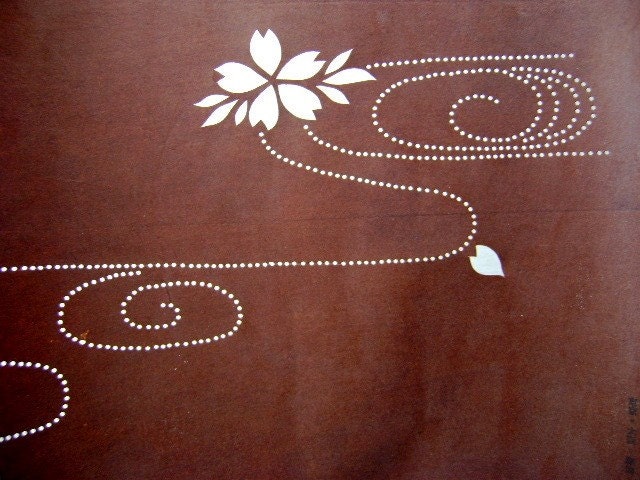
Vintage Japanese Kashigata Stencil Cherry Blossoms via @etsy

http://ny-image3.etsy.com/il_fullxfull.235022679.jpg

http://www.etsy.com/listing/71922766/vintage-japanese-kashigata-stencil

This was an amazing find. They are from the "昭和" "showa period" . The "showa" period is from 1926-1989 but these are at about 25-30 years old . This is called "型紙" or "katagami". This is a stencil that was used to make "kashigata" (for more information on "kashigata please see below).

This is really gorgeous! The shape is that of a "kamon" which means a family crest (which crest we don't know). There are no set rules in the design of a kamon. It most commonly consists of a roundel encircling a figure of plant, animal, man-made, natural or celestial objects, all abstracted to various degrees. Religious symbols, geometric shapes and kanji were commonly used as well. These symbols are often found in logos of stores (which help to identify what they sell), sushi restaurants, and on packages of food to lend an air of elegance. Senbei (Japanese crackers) and other traditional Japanese sweets may also use one.


This one is made from paper-but not flimsy normal paper....this is wonderful thick Japanese paper and it is in fabulous condition.

This stencil could be used but it would also be fabulous framed and hung on a wall.

* the cherry blossom petals are fluttering down on the water like snowflakes.

The stencil measures about 28cm x 26.5cm.

More information on "kashigata" (the sweets made from the molds that were made using the stencils).

In the past, when a person died, it was expensive to give flowers or fresh food so, people made sweets (these are made from soy flour, rice flour and sugar) in the form of flowers, fish etc. These items were then placed on the "butsudan" (family shrine found in the house) for the dead person.

The sweets was also used for holiday celebrations, tea ceremony etc. These are for decoration only-they are never eaten.

**********************************************************
Our Etsy Stores:

Supplies FromJapanWithLove.etsy.com
Deco Sweet Supplies DecoSweets.etsy.com
Handmade SouZouCreations.etsy.com
Vintage VintageFromJapan.etsy.com

We will combine shipping if you buy from any of our stores.

Saturday, November 6, 2010

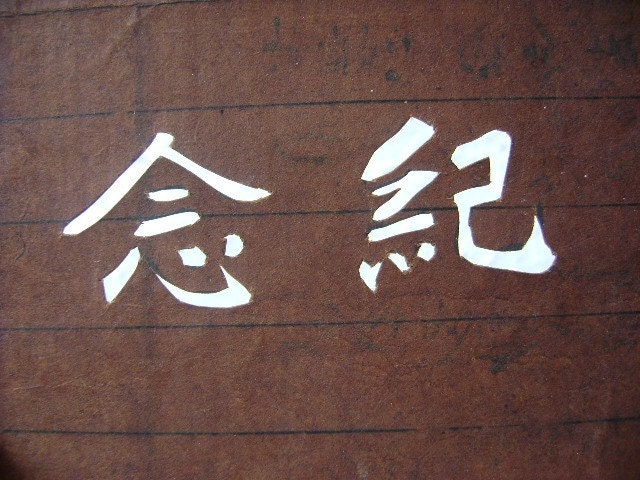
Vintage Japanese Kashigata Stencil Commemoration Taishou Period

http://ny-image0.etsy.com/il_fullxfull.188694732.jpg vintage stencil

This was an amazing find. This is from the Taishou Period which was from 1912-1926. This is called "型紙" or "katagami". This is a stencil that was used to make "kashigata" (for more information on "kashigata please see below). Apparently, these (we have around 100 to list) were found in an old Japanese sweets store in Kyoto.

This one has the kanji of 紀念(kinen) means "commemoration".

Many people are also aware that the years preceding and following a major yakudoshi are yakudoshi year too. The year before yakudoshi is called "maeyaku," while the year after is called "atoyaku."

This one is made from paper-but not flimsy normal paper....this is wonderful thick Japanese paper and it is in fabulous condition even though it is at least 83 years old.

This stencil could be used but it would also be fabulous framed and hung on a wall.

This stencil measures 13.5 x 8.3cm.

More information on "kashigata" (the sweets made from the molds that were made using the stencils).

In the past, when a person died, it was expensive to give flowers or fresh food so, people made sweets (these are made from soy flour, rice flour and sugar) in the form of flowers, fish etc. These items were then placed on the "butsudan" (family shrine found in the house) for the dead person.

The sweets was also used for holiday celebrations, tea ceremony etc. These are for decoration only-they are never eaten.


http://www.etsy.com/listing/60573907/vintage-japanese-kashigata-stencil

**********************************************************
Our Etsy Stores:

Supplies- FromJapanWithLove.etsy.com
Deco Sweet Supplies- DecoSweets.etsy.com
Handmade- SouZouCreations.etsy.com
Vintage- VintageFromJapan.etsy.com

We will combine shipping if you buy from any of our stores. 

Tuesday, February 9, 2010

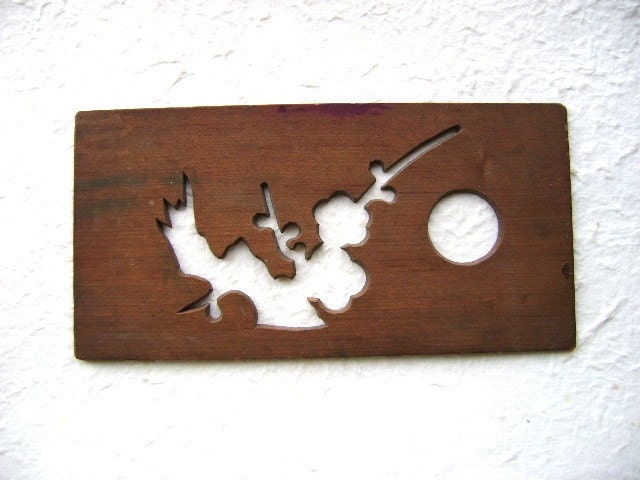
Vintage Japanese Kashigata Stencil Plum by vintagefromjapan

Vintage Japanese Kashigata Stencil - Plum Blossoms And Tree -

Vintage Japanese Kashigata Stencil - Plum Blossoms And Tree -

This was an amazing find. This is called "型紙" or "katagami". This is a stencil that was used to make "kashigata"

This one is made from wood. It is in fabulous condition

This stencil could be used but it would also be fabulous framed and hung on a wall.

This stencil measures 18.2 x 9cm.

More information on "kashigata" (the sweets made from the molds that were made using the stencils).Kashigata were used to make dried confectionery made of rice flour and sugar called rakugan. Earliest records show that this practice dates back to the mid-17th century. These confections were used as offerings and snacks for celebratory occasions and even unfortunate events. For example when a person died, it was expensive to give flowers or fresh food so, people made these sweets in the form of flowers, fish etc. These items were then placed on the "butsudan" (family shrine found in the house) for the dead person.

Kashigata were also used in the making of wagashi (nama-gashi or freshly made cake and hi-gashi or dried confectionery) for tea ceremonies.

Common kashigata motifs in the Edo era - chrysanthemums, plum blossoms Meiji Era - spread of western technology - balloons, planes World War II - national pride heightened - cherry blossoms, battleships - used as gifts for departing troops, ceremonies and commemorative occasions

With the advent of refrigeration, fresh fish replaced rakugan motifs like the sea bream. Sadly today, making offerings for fortunate and unfortunate events is no longer a common practice. This in turn has lessened rakugan demand although they are still found in tea ceremonies and homes. The decrease in kashigata artisans today has made kashigata carving a dying craft making kashigata itself a sought-after collectible.

http://www.etsy.com/view_listing.php?listing_id=40271282

Posted via web from fromjapanwithlove's posterous

LinkWithin

Related Posts with Thumbnails