Showing posts with label japanese stencil. Show all posts

Wednesday, April 2, 2014

Katagami Stencil From Japan


This was an amazing find. They are from the "昭和" "showa period" . The "showa" period is from 1926-1989 but these are at about 25-30 years old . This is called "型紙" or "katagami". This is a stencil that was used to make "kashigata" (for more information on "kashigata please see below).

This is really gorgeous! The shape is that of a "kamon" which means a family crest (which crest we don't know). There are no set rules in the design of a kamon. It most commonly consists of a roundel encircling a figure of plant, animal, man-made, natural or celestial objects, all abstracted to various degrees. Religious symbols, geometric shapes and kanji were commonly used as well. These symbols are often found in logos of stores (which help to identify what they sell), sushi restaurants, and on packages of food to lend an air of elegance. Senbei (Japanese crackers) and other traditional Japanese sweets may also use one.

For more of our vintage stencils please click here
http://www.etsy.com/shop/VintageFromJapan?section_id=6263764

Saturday, August 25, 2012

Katagami Stencils for Kashigata Mold Making 型紙 菓子型

Katagami

Katagami Stencils for Kashigata Mold Making 型紙 菓子型

http://www.etsy.com/shop/VintageFromJapan?section_id=6263764
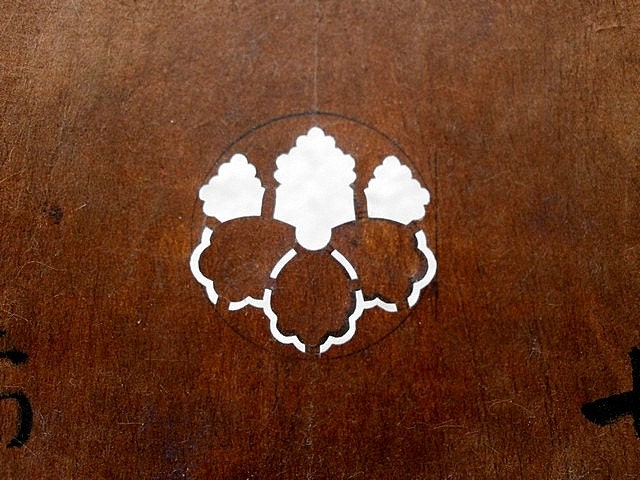
This was an amazing find. They are from the "昭和" "showa period" . The "showa" period is from 1926-1989 but these are at about 25-30 years old . This is called "型紙" or "katagami". This is a stencil that was used to make "kashigata" or "菓子型" (for more information on "kashigata please see below).

This is really gorgeous! The shape is that of a "kamon" which means a family crest (which crest we don't know). There are no set rules in the design of a kamon. It most commonly consists of a roundel encircling a figure of plant, animal, man-made, natural or celestial objects, all abstracted to various degrees. Religious symbols, geometric shapes and kanji were commonly used as well. These symbols are often found in logos of stores (which help to identify what they sell), sushi restaurants, and on packages of food to lend an air of elegance. Senbei (Japanese crackers) and other traditional Japanese sweets may also use one.


This one is made from paper-but not flimsy normal paper....this is wonderful thick Japanese paper and it is in fabulous condition.

This stencil could be used but it would also be fabulous framed and hung on a wall.

The stencil measures about 9 x 9.5 cm.

Thursday, July 26, 2012

Vintage Japanese Stencil Family Crest Kamon UU by FromJapanWithLove

Media_httpimg1etsysta_sfgia

Vintage Japanese Stencil Family Crest Kamon UU by FromJapanWithLove http://www.etsy.com/listing/85952599/vintage-japanese-stencil-family-crest

This was an amazing find. They are from the "昭和" "showa period" . The "showa" period is from 1926-1989 but these are at about 25-30 years old . This is called "型紙" or "katagami". This is a stencil that was used to make "kashigata" (for more information on "kashigata please see below).

This is really gorgeous! The shape is that of a "kamon" which means a family crest (which crest we don't know). There are no set rules in the design of a kamon. It most commonly consists of a roundel encircling a figure of plant, animal, man-made, natural or celestial objects, all abstracted to various degrees. Religious symbols, geometric shapes and kanji were commonly used as well. These symbols are often found in logos of stores (which help to identify what they sell), sushi restaurants, and on packages of food to lend an air of elegance. Senbei (Japanese crackers) and other traditional Japanese sweets may also use one.

This one is made from paper-but not flimsy normal paper....this is wonderful thick Japanese paper and it is in fabulous condition.

This stencil could be used but it would also be fabulous framed and hung on a wall.

The stencil measures about 9 x 9.5 cm.

Thursday, June 7, 2012

Vintage Japanese Stencil Flowers Leaves Kimono Katagami in Showa Period

Media_httpimg1ecetsys_nfhqm

Vintage Japanese Stencil Flowers Leaves Kimono Katagami in Showa Period http://www.etsy.com/listing/92268437/vintage-japanese-stencil-flowers-leaves

This was an amazing find. This is called "型紙" or "katagami" stencil. This is a stencil that was used to make "kashigata" (for more information on "kashigata please see below).

They are from the "昭和" "showa period" . The "showa" period is from 1926-1989 but these are at about 25-30 years old .

Katagami are made of multiple layers of thin mulberry paper which are bonded with a glue extracted from persimmon, which makes a strong flexible brown coloured paper.

This katagami was used for "katazome" which is the method of dyeing fabrics (kimonos) using a stencil and a resist paste. The resist paste was made with rice flour and when dyed, the dye didn't adhere to the areas covered with the paste. It was an inexpensive way to make all-over patterns similar to a woven cloth.

Wednesday, May 23, 2012

Vintage Japanese Stencil Family Crest Kamon Stencil C9 by VintageFromJapan on Etsy

Media_httpimg0ecetsys_jdnbf

Vintage Japanese Stencil Family Crest Kamon Stencil C9 by VintageFromJapan on Etsy http://www.etsy.com/listing/100242379/vintage-japanese-stencil-family-crest

This was an amazing find. They are from the "昭和" "showa period" . The "showa" period is from 1926-1989 but these are at about 25-30 years old . This is called "型紙" or "katagami". This is a stencil that was used to make "kashigata" (for more information on "kashigata please see below).

This is really gorgeous! The shape is that of a "kamon" which means a family crest (which crest we don't know). There are no set rules in the design of a kamon. It most commonly consists of a roundel encircling a figure of plant, animal, man-made, natural or celestial objects, all abstracted to various degrees. Religious symbols, geometric shapes and kanji were commonly used as well. These symbols are often found in logos of stores (which help to identify what they sell), sushi restaurants, and on packages of food to lend an air of elegance. Senbei (Japanese crackers) and other traditional Japanese sweets may also use one.

LinkWithin

Related Posts with Thumbnails